Dema
One shared context for every agent – that people can see and correct
- Year: 2026
- My role: Product designer
Problem
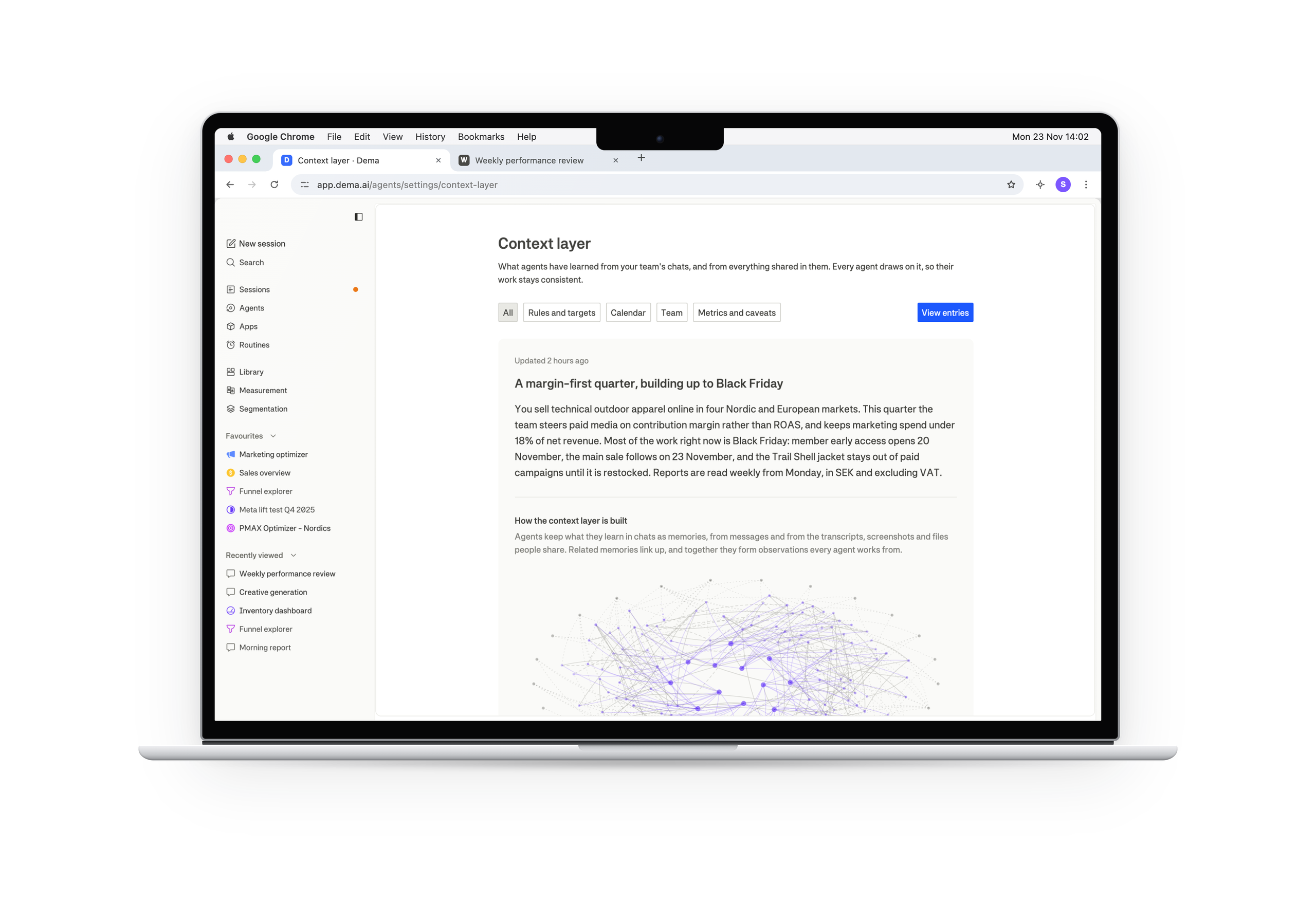
- Each agent kept its own context, so two agents could give different advice about the same company.
- Agents didn’t pick up changes that happened outside their own chats, like a new campaign date or a new target.
- Users couldn’t see what an agent knew, or why it gave a certain answer – which made it hard to trust.
Solution
- A shared context layer or ”agent memory” hidden in agent settings. Most users never think about context issues, until they have to trouble shoot.
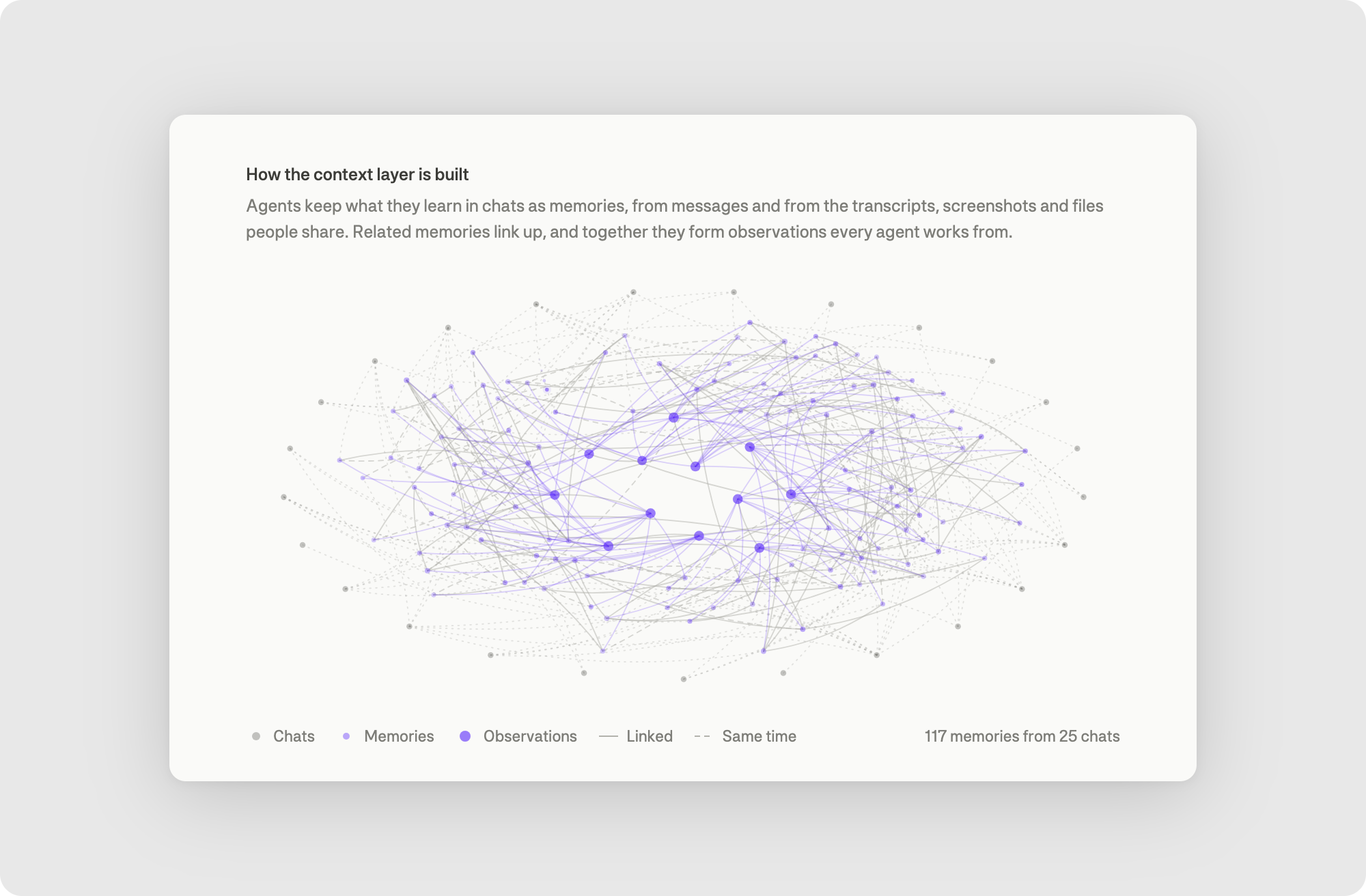
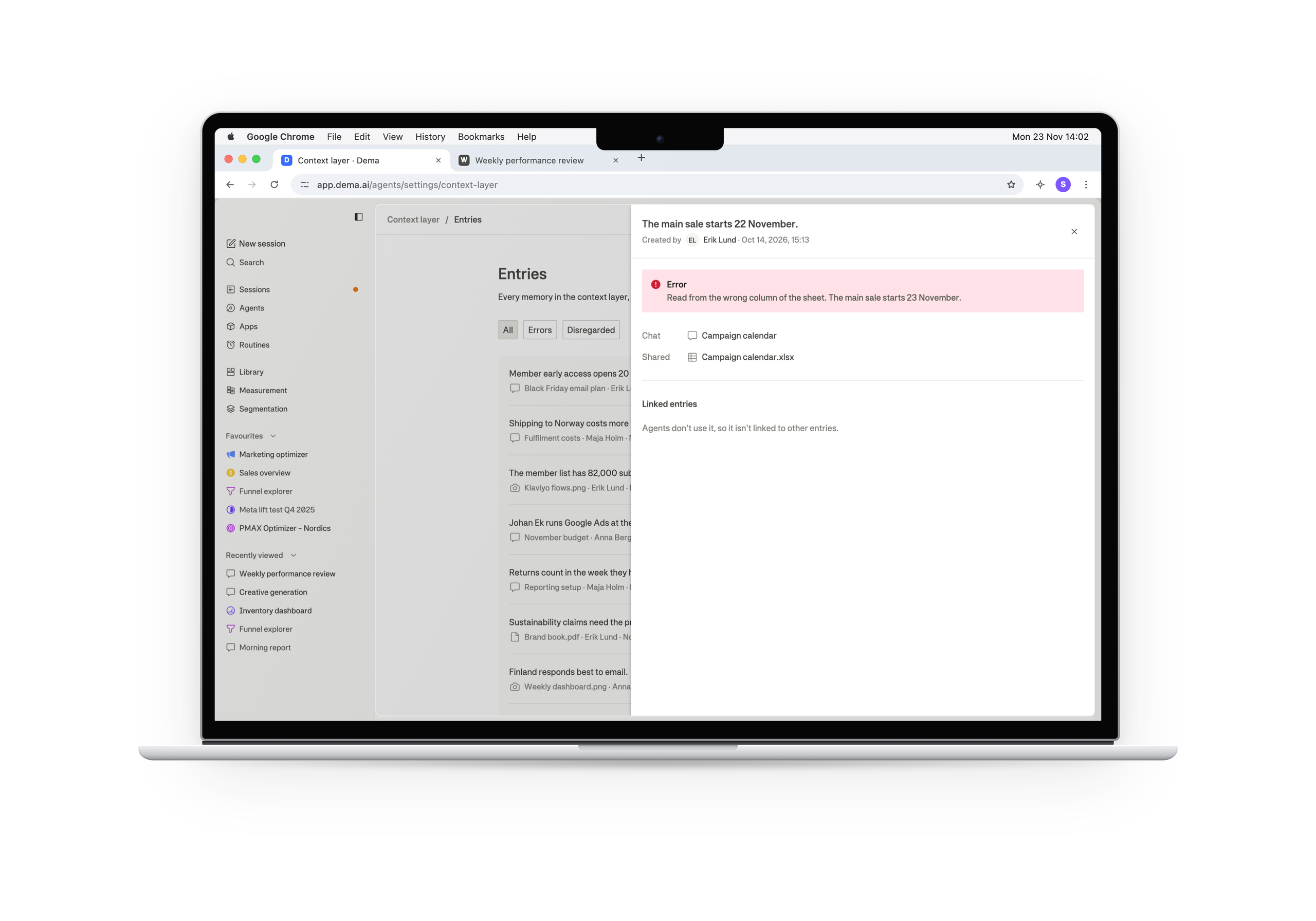
- Every memory shows where it came from – which chat, which file, and who was part of it.
- People can correct it. A memory can be marked as invalid, with the reason, so agents stop using it.
- Updates show up in the chat. When an agent changes the context layer, it says what changed and what it was before.
Outcome
- A first attempt of visualising shared organisational context.
My role and contribution
- I led the discovery and design of the shared context layer. I did desk research on how other products handle memory and shared context, and reviewed how one of our power users had built their own context layer out of skills. Their setup showed that people want to steer memory, not edit it – and that even the parts meant to be edited by hand rarely are.
- I drove the user discovery and coded the prototype for the first release.
My biggest takeaway: Transparency builds trust, but only if it’s simple enough to read. Showing where a memory came from mattered more than showing everything.