Dema
Letting an AI agent design its own charts without breaking the brand
- Year: 2026
- My role: Product designer
Problem
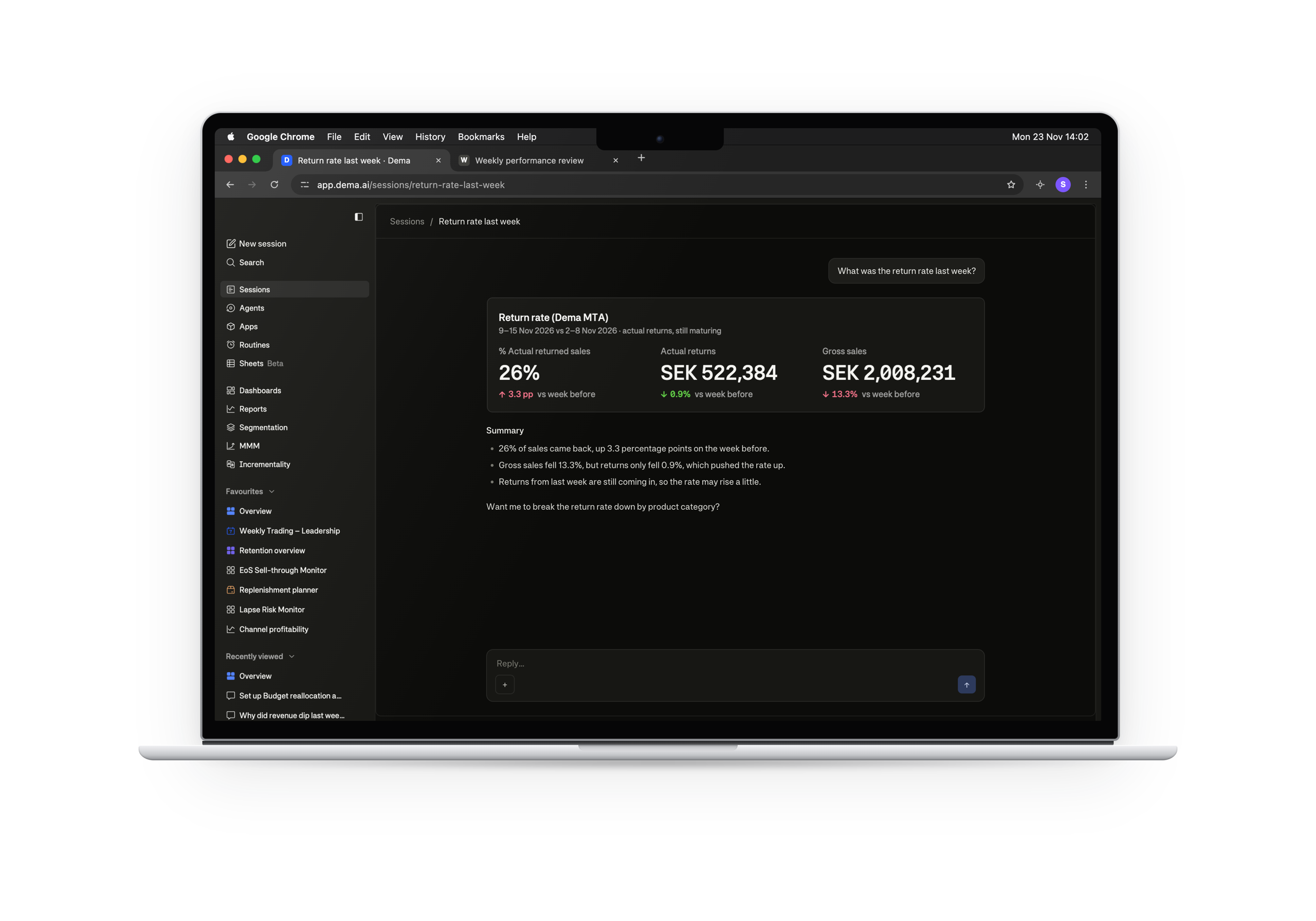
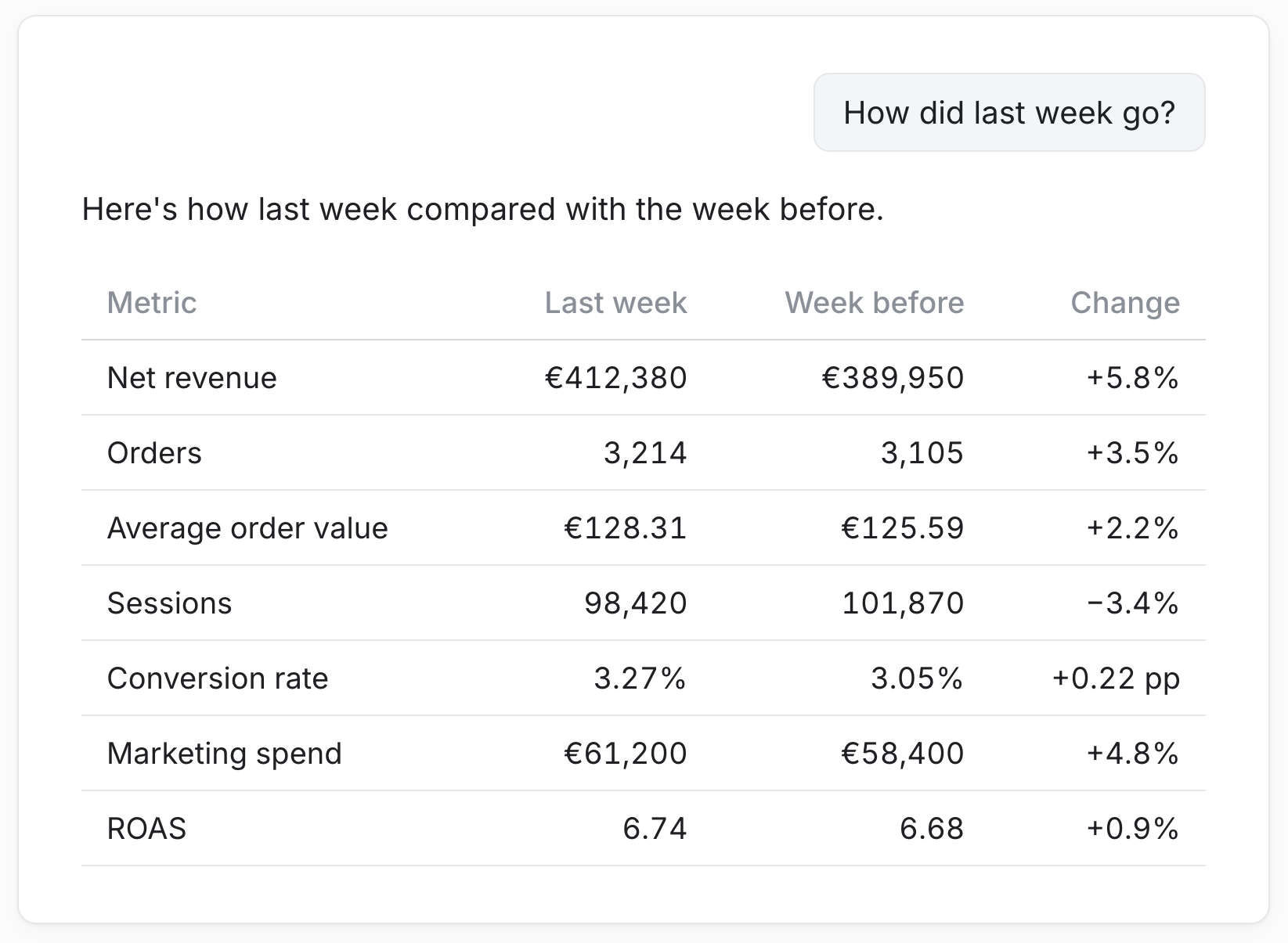
- Users can ask Dema’s agent about anything, but it answered every data question with the same plain table.
- The reader had to find the pattern on their own, even when the answer was one number or one clear trend.
- We couldn’t design a chart for every possible question. The agent had to design its own – and still look like Dema.
Solution
I tested two setups on the same set of real user questions:
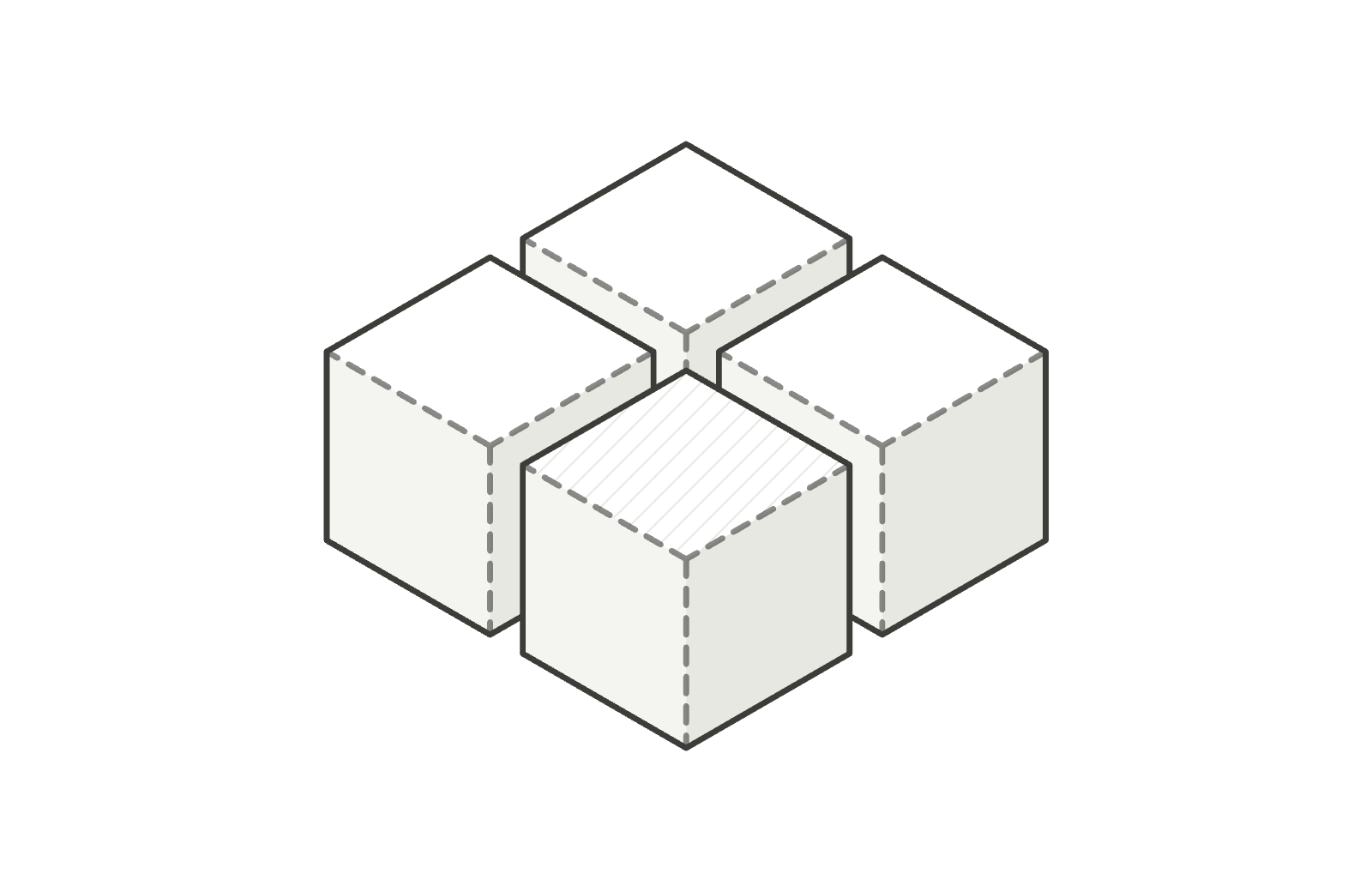
- Full harness: I mapped real questions to a set of visual clusters built on the design system. The agent picked a cluster and filled in the data. It couldn’t write CSS or nest widgets.
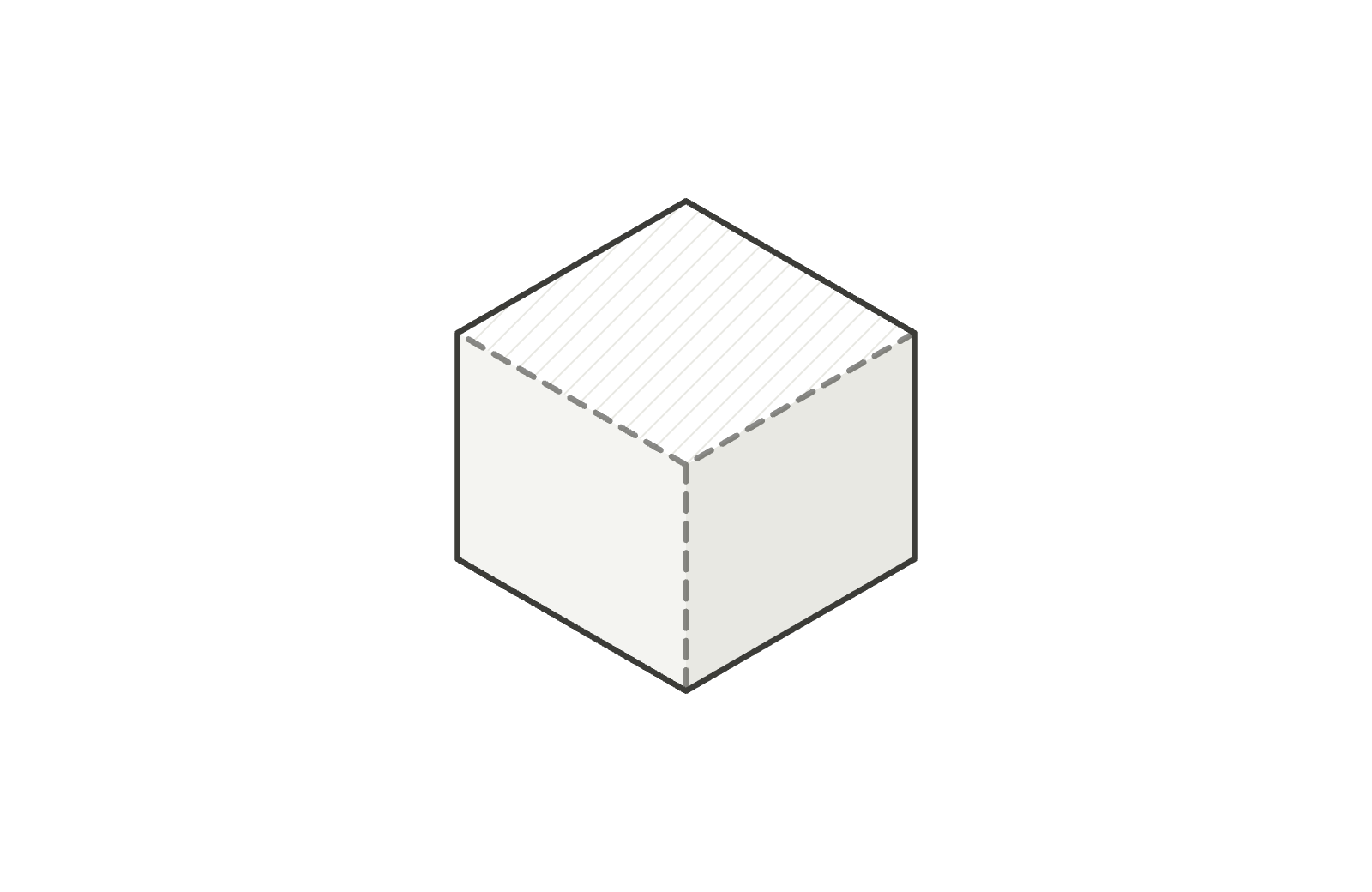
- Minimal harness: The agent got only the design system’s foundational components and a short design guide I wrote, describing how a designer at Dema decides which chart or table fits a question. A validator checked the few rules that had to hold.
Outcome
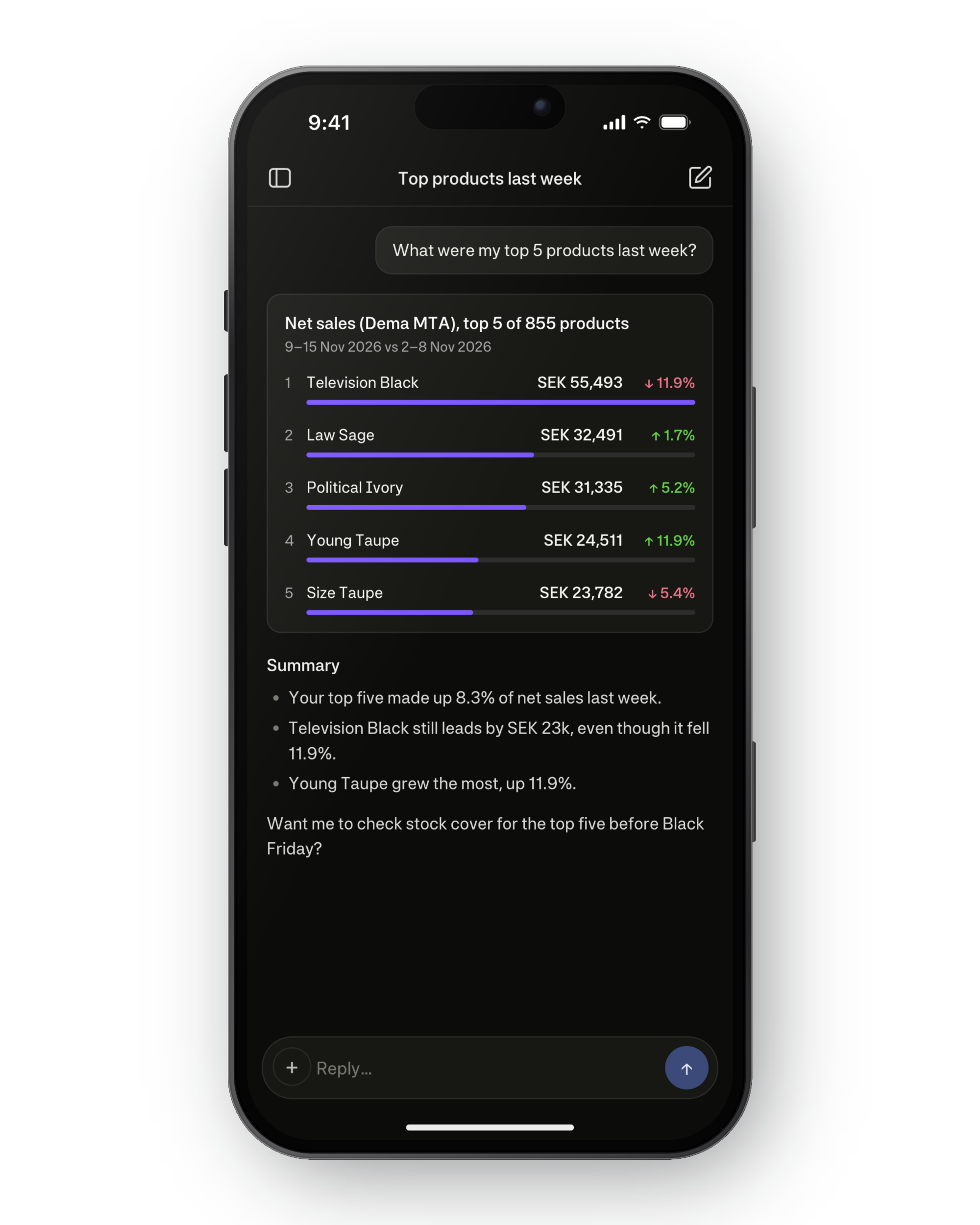
- The minimal harness gave the better answers: KPI cards for ”how did last week go?”, a line chart for daily trends, a waterfall for what drove a change.
- Fewer rules, better design. Principles in the prompt guided the agent, while hard rules held it back.
Setup 1 · Full harness, deterministic output
Questions mapped to visual clusters
I analysed real user questions and mapped them to a structure built on the design system. The agent chose one of the visual clusters and filled in its data fields. It could not write CSS or nest widgets.
Setup 2 · Minimal design harness, only foundational components
Components and design instructions
The agent got the design system’s components and a markdown file with design instructions I wrote, which describes how a designer at Dema decides what kind of chart or table fits a question. It then built its own widget.
My role and contribution
- I was the product designer on the agent team, responsible for how the agent presents data. I analysed real user questions, designed the visual clusters, wrote the design guide the agent works from, and ran the comparison between the two setups.
- I went in assuming the agent would need a lot of context to apply a design system it had never seen. It turned out the opposite was true: with many templates, the agent forced every question into the closest one instead of designing an answer.
My biggest takeaway: put the rules in code and the principles in the prompt.